
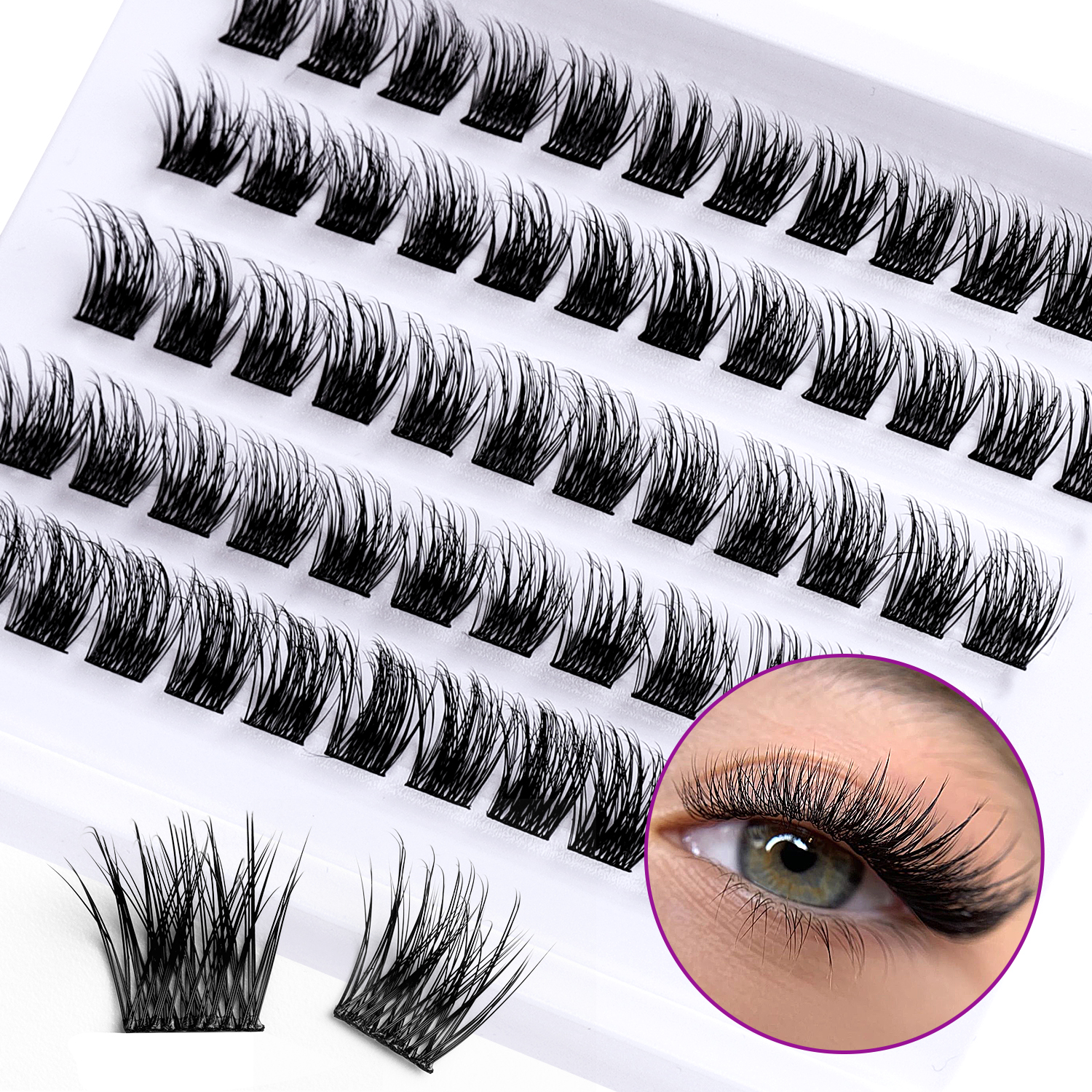
A lash assortment can contain pairs of strip lashes, individual clusters, magnetic pieces and kit accessories. A useful sourcing brief separates these units before discussing branding or samples. This checklist uses published product examples to keep the requested configuration clear.
1. Name the product format and its pack unit
Start from the lash product range and choose the application format. Three published examples use different units:
- HL10 Fox-Eye Strip Lash Tray is listed as 10 pairs, with six selectable styles.
- MF11 Mixed-Length DIY Lash Clusters is listed as 60 individual clusters in a five-row tray, with seven selectable styles.
- CT10 Magnetic Lash Set is listed as one pair made up of four lash pieces, with a mirrored round case and an applicator, and eight style options.
“Ten lashes” could mean very different things in these formats. Write pairs, individual clusters or pieces explicitly. Where the pack count changes with the selected style or configuration, keep that option attached to the request.
2. Shortlist the model and style together
Record the product link, model number, style or SKU reference, and pack option. Add the visual direction you want to evaluate, such as the shape or the arrangement of lengths. Where a dimension, construction or material is not stated, request confirmation rather than estimating it from a photograph.
Existing listed options are a starting reference. A new style combination, construction or material request needs feasibility review and sample confirmation. It should not silently replace the original model reference in your brief.
3. Write out every kit component
A lash tray is not automatically a complete retail kit. Confirm whether the selected configuration includes a case, applicator, adhesive, bond, seal, remover or other accessory. Ask for clarification whenever a pictured item is not named in the pack specification.
- State the lash format, number of pairs or clusters, and selected style.
- List the case or tray and its layout.
- Name each included accessory and its quantity.
- Identify separately any adhesive or care product and its recorded net content.
- Mark optional additions as requests until the configuration is confirmed.
This prevents a magnetic kit with an applicator from being compared directly with a lash-only tray as if the contents were identical.
4. Define the sample review before requesting the pack
Include what you need to evaluate: the selected lash style, length arrangement, band or cluster format, placement in the tray, case, applicator and printed presentation. Confirm the scope and availability of the reference sample for that exact configuration.
Keep feedback tied to the model and style. Use a simple record with the sample reference, the observed detail, the requested change and the final decision. Separate acceptance of the lash item from acceptance of the branded pack so an approved style is not mistaken for approval of every component.
5. Check branding with the actual pack
Provide logo and artwork direction, style labels, outer-carton requirements and the intended retail contents. Ask which decoration and pack changes can be reviewed for the chosen item. A new case or tray layout may require a different review from a change to a label.
Confirm the final included components and their quantities in writing. The broad collection name or one promotional image is not a substitute for the pack specification.
6. Request records by item and component
Identify the intended market and ask which product specifications, inspection points, directions and supporting records are relevant to your selection. Adhesive, bond, seal, remover and care products need their own product information; a record for one component should not be assumed to cover the complete kit.
Use material or performance wording only when it is supported for the selected item. Another model, a styling photograph or a video does not establish composition, wear duration or market suitability.
For a concrete document request, the 1056-8786 self-adhesive lash reference has a product-specific safety information source on file. Ask which sample and configuration it covers and check its applicability to your selected version. Keep the scope of the lash record separate from any additional kit component.
7. Send an inquiry that can be assessed
Include the model and style, exact pack unit, components, branding direction, intended market and estimated quantity by configuration. Share your required delivery date as an input for review. Order conditions and schedules are confirmed after the item, pack and sample approval requirements are assessed.
Return to the lash category page, review packaging and branding services, or send your sourcing brief. A clear component list makes it easier to review the actual product you intend to source.