
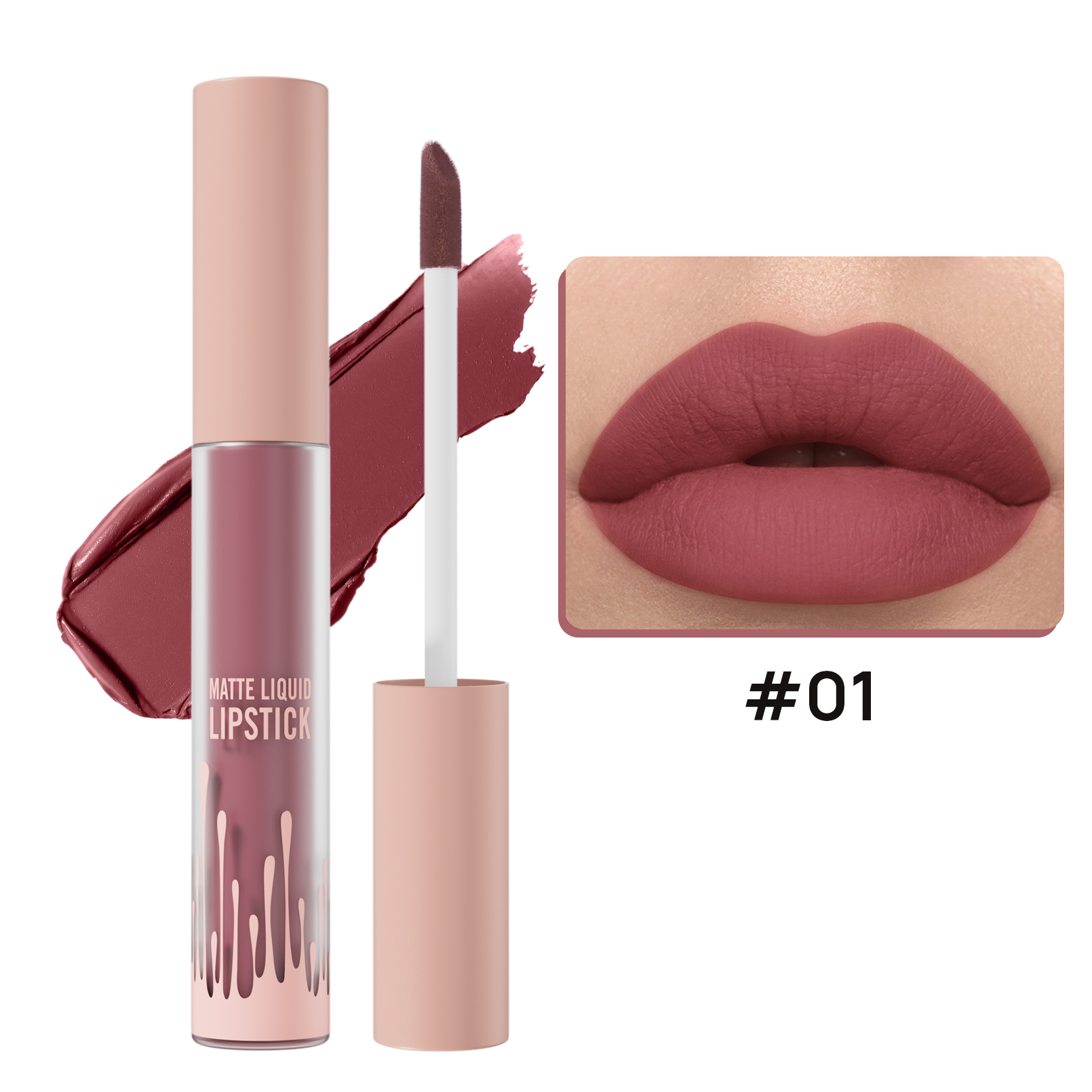
A useful lip makeup sample request identifies a product and the decisions you need to make. “A pink lip product with our logo” leaves the format, shade reference, applicator and pack open. This checklist helps a brand keep those choices attached to the model being evaluated.
1. Choose the product format before comparing colors
The current lip makeup range includes different product formats. Three examples illustrate why the starting model matters:
- Lip Glow Oil 9901 is listed as 8 ml in a transparent tube with a doe-foot applicator and eight shade references.
- Matte Liquid Lipstick 9908 is listed as 3.5 g with a doe-foot applicator.
- Butter Lip Balm SZ02191 is listed as 15 g (0.5 oz) in a flexible squeeze tube with a slanted applicator and five scent/color options.
These are recorded specifications for distinct models. They do not establish that one formula, net content or component can be transferred to another. Record the product link and model number in the brief before discussing changes.
2. Separate an existing shade from a development request
If you want to sample an existing option, include its exact shade or SKU reference. If you need a different color, texture or finish, identify the desired reference and what you want to change. Keep a note of the reference you supplied so sample comments refer to the same target.
Ask which requested changes can be evaluated for that product direction. Do not mark a requested formula, scent or finish as approved before the sample review. Screen images are useful for shortlisting; the agreed sample should identify the production reference.
3. Make a packaging brief that can be checked
Describe the container, cap, applicator and printed presentation separately. A doe-foot tube, a squeeze tube and a solid lipstick component create different packaging choices. Include the model you are using as the starting reference and which component details must remain the same.
- Confirm the recorded fill statement and the proposed product format.
- Identify the container, cap or closure and applicator.
- Supply the proposed logo, artwork dimensions, shade label and outer-carton direction.
- List any component change or substitution that needs review.
- Confirm what the requested sample will show: product, components, artwork or the combined pack.
A photograph can show a listed product presentation. It does not confirm a new component, decoration or printed claim for your order.
4. Record sample feedback against specific decisions
Use one record for the model and selected shade. Note the sample reference, the aspect reviewed, the requested change and whether the revision is accepted or still open. Useful headings include appearance, shade reference, texture or finish, applicator, closure, fill statement and printed pack.
Keep product approval separate from artwork approval. For example, accepting the selected lip balm reference does not automatically accept a new cap, carton or scent request. Agree the final product specification and pack together before proceeding.
5. Match supporting records to the chosen product
Send the intended market and ask which specifications, inspection criteria, testing records and product information can be reviewed for that model or formula. For each supplied record, check the named holder, covered product, issue date and scope.
A catalogue document label or general company credential should not be treated as evidence for every lip product. If a change affects the formula, packaging or intended claims, ask which supporting information applies to the changed version.
Selected records can make the document request more precise. A safety information source is held for the CZMQ40 lipstick and liner reference. A reviewed test report for model 926 covers the documented shade 6# sample and microbiological/heavy-metal test items. Ask to review the record against your selected version, its holder and market; carry any applicability questions into the brief.
6. Send a brief with clear open items
Include the product model, selected shade or reference, proposed packaging, intended market, estimated quantity by model or shade, and what you need to evaluate. Add your desired delivery date as a planning input. Order requirements and schedules are confirmed after product, component and sample-approval review.
Use the lip category page to return to the assortment, review project services for the development route, or send your sample brief. The aim is an agreed product and packaging reference, with unresolved changes clearly recorded rather than assumed.