
A buyer who writes “Dark Brown” for model 9704 still has a SKU to choose: 9704-1-02 and 9704-2-02 both use that shade name. The same assortment may include a complete nine-pan palette, a magnetic lash pair made of four pieces, or a tray of 36 clusters. Product codes and pack units keep that color story precise enough to source.
A brow pen with two defined applicators
9704 Dual-Ended Four-Tip Brow Pen and Eyeliner combines a four-tip brow applicator with a pointed eyeliner applicator. The recorded contents are 1 ml + 1 ml. The shade references are Light Brown, Dark Brown, Grey and Black.
The product has more than one image or SKU group using those shade names. For example, 9704-1-02 and 9704-2-02 both carry a Dark Brown label in the product options. Include the full selected SKU and its reference image when preparing the brief. The shade name by itself leaves the group unresolved.
For this format, packaging copy should identify both ends accurately. A product sheet can list the applicators and their individual fill statements, while artwork records which information appears on the unit and which appears on the outer carton.
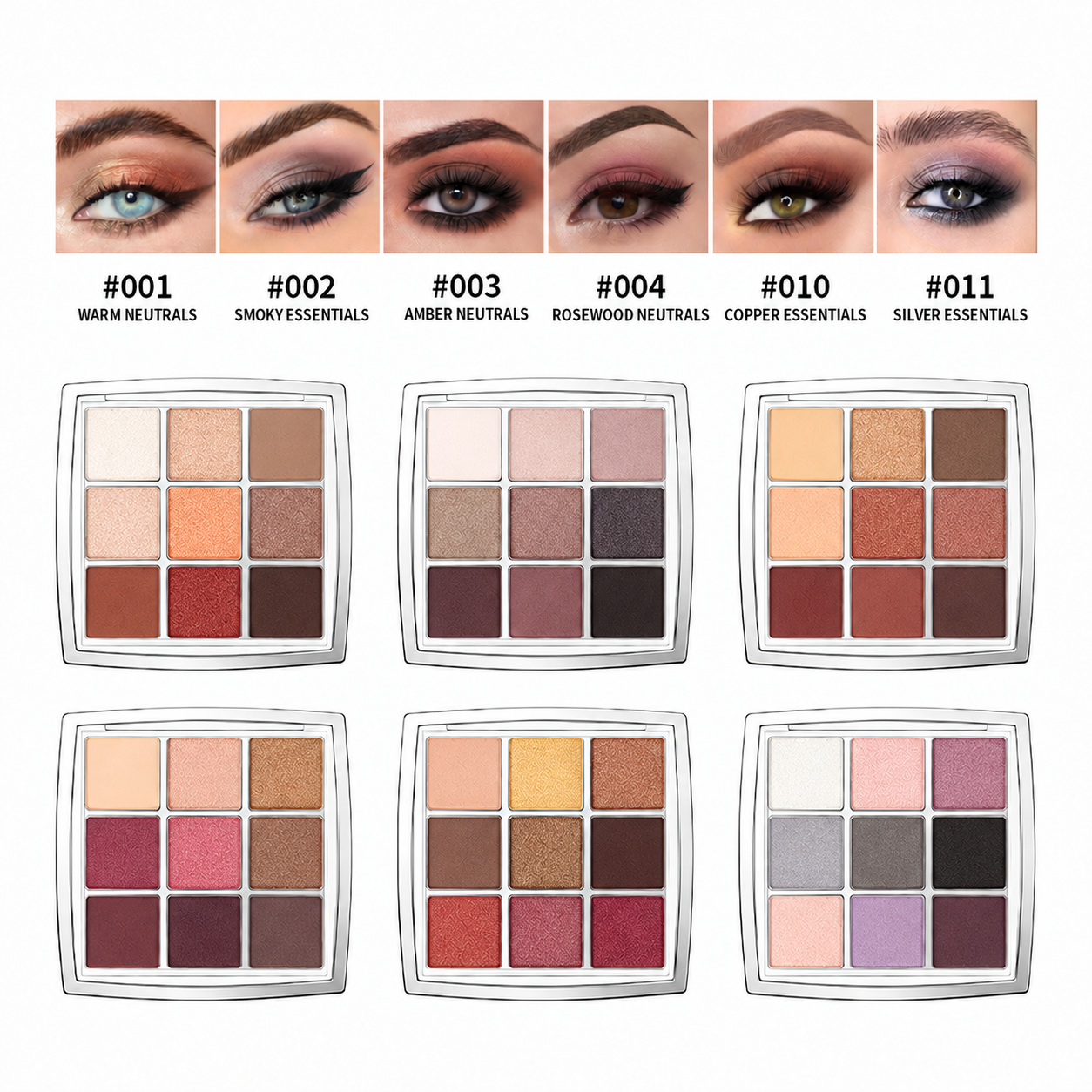
A palette choice is a complete nine-pan arrangement
SZ02582 Artist 9-Pan Eyeshadow Palette contains nine powder pans per selected palette, with a recorded total of 10 g. Six palette choices are listed, including #001 Warm Neutrals and #004 Rosewood Neutrals. The range includes matte, pearly, satin and metallic finishes.
Choose the complete palette reference first. If the brief proposes a different pan arrangement or new shades, mark those as development requests. Keep the pan position attached to each requested change so the artwork layout and sample comments use the same arrangement.
A palette name and a brow shade name serve different purposes. Warm Neutrals describes one nine-pan choice; Dark Brown identifies an option for the pen. Use the product codes to keep the range organized, then review the visual relationship between the chosen products.
Magnetic pieces and individual clusters use different units
CT10 Magnetic Lash Set is listed as one pair consisting of four lash pieces. Its recorded pack includes a mirrored round case and a magnetic lash applicator. Eight style options are available. The selected CT10 style belongs beside the case and applicator in the component list.
1056-8786 Glueless Sunflower Lash Clusters is a tray of 36 self-adhesive black synthetic-fiber clusters in a spiked sunflower style. The tray dimensions are listed as 9.3 × 9.2 cm. Here, the product unit is a tray containing individual clusters.
Write those units out in full on the assortment sheet: one magnetic pair / four pieces for CT10, and 36 clusters for 1056-8786. A quantity stated only as “lashes” would leave the requested contents unclear. Use the named components when comparing pack layouts or preparing product descriptions.
Give the assortment a consistent presentation
The four selected products can share a visual direction while retaining their own pack information. A pen unit, a palette, a mirrored lash case and a cluster tray need artwork dimensions appropriate to each component.
A useful presentation brief records the selected product, the artwork area, the shade or style code, the proposed outer pack and the components included. Where you want a new color, finish, case or tray layout, identify it as a change for review. This lets the brand direction remain consistent without obscuring the individual product specification.
Check the wording attached to the range
Use the product photographs and specifications to describe the selected format and contents. Material, wear-time, water-resistance and market claims need support for the exact item. For example, a tray photograph gives a styling reference; it does not establish a wear duration for that product.
For the self-adhesive lash reference, product-specific safety information is held with the sourcing records. Its sample and holder still need to be checked against the supplied version and intended market. Request separate information for any additional adhesive or care component included in a revised pack.
Return to the eye collection and lash collection to select the product codes. The lash sourcing checklist covers the later component review. To discuss the assortment, send the models, shade or style codes, pack direction and estimated quantities.