
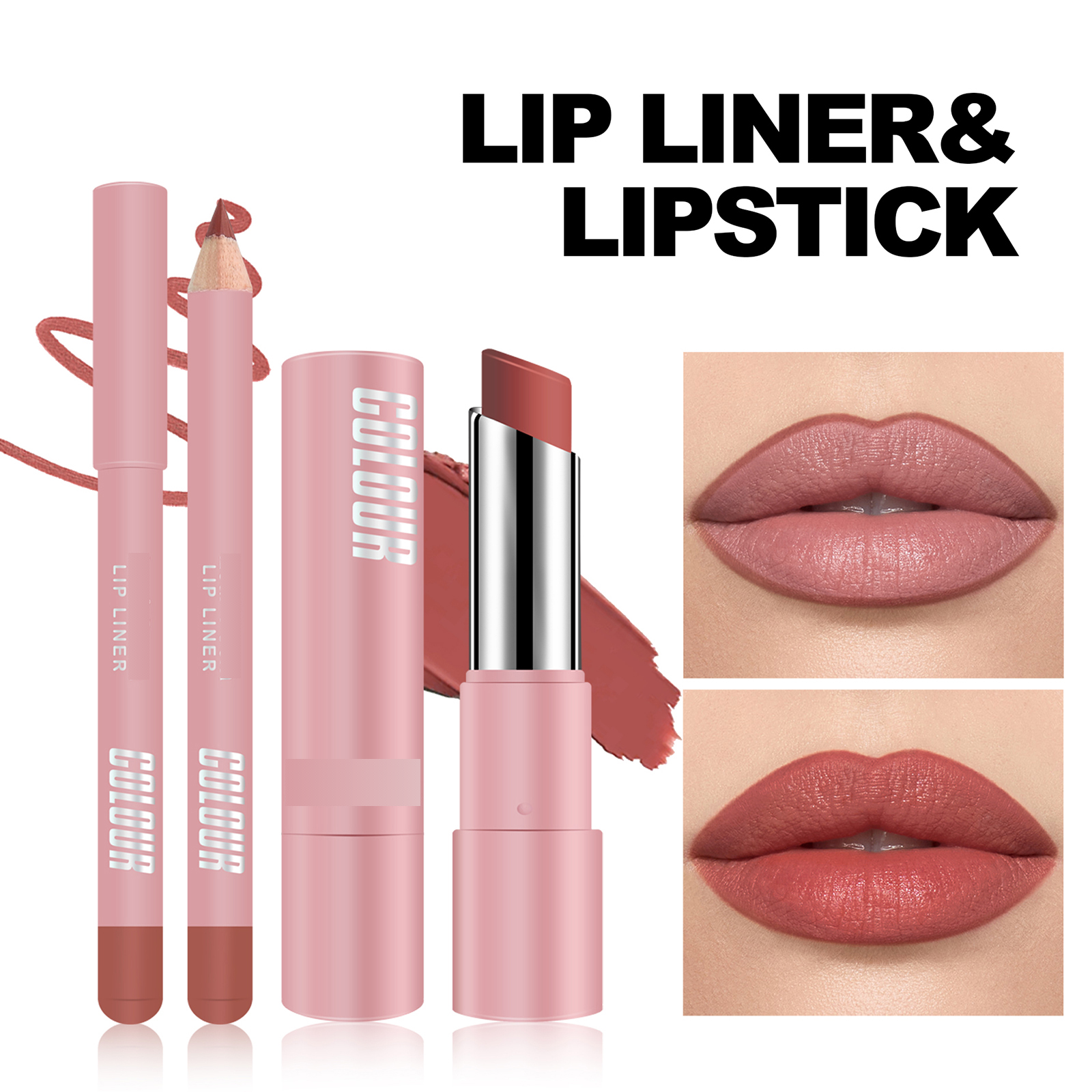
SZ02230 puts liner and lip color in one 3 g unit. CZMQ40 pairs a lipstick bullet with a separate liner. Those are different packaging briefs before any question of custom formulation arises. Two face products add another choice: an 18 g skin tint stick or a 7.5 g pressed blush compact. Start with these physical formats, then decide which branding or formula changes the assortment needs.
One lip product or a coordinated pair?
SZ02230 Two-in-One Lip Liner and Lipstick is a single pointed-tip product for outlining and filling lips. It is listed at 3 g in six shades, from #01 Milky Tea to #06 Coffee. A brief for this model can name one shade code and one product unit, then identify the proposed decoration and outer packaging.
CZMQ40 Matte Lipstick and Lip Liner Duo uses two separate components: a lipstick bullet and a pencil liner in a pink kit. Eight shade references are shown. Its information sheet records 3 g; the final pack specification should identify the fill statement for each component rather than assigning that figure to both.
The choice affects how the assortment is described. For SZ02230, the product line identifies one two-in-one unit. For CZMQ40, it needs to identify the lipstick, the liner and the shared presentation. Keep the selected shade attached to both the product brief and the artwork so a kit image cannot be mistaken for a single item.
Two face formats with different packaging decisions
SZ02293 Solid Skin Tint Stick is an 18 g twist-up stick offered in six numbered shades. The stick mechanism and cap are part of the format a buyer is selecting. When using it as the starting reference, identify the model, chosen shade and which component details you want retained.
8912 Petal Powder Blush is a 7.5 g pressed powder in a round compact with a mirror and a petal-patterned pan. Its three listed shades are 01 Spring Orange, 02 South France Brown and 03 Pink Silver Beach. The compact, mirror, pan and printed presentation belong on the packaging line alongside the selected shade.
These two examples also show why net content belongs next to the model. The 18 g statement describes the skin tint stick; 7.5 g describes the blush. Record each product separately even if they will share a carton design or sit in the same retail collection.
Keep the shade references specific
The two lip products and the two face products each have their own shade system. A label such as #01 identifies a choice within that product range. It does not establish a color match between the lip pencil, skin tint and blush.
Build the assortment sheet around model, shade name or code, and the corresponding product image. If you want a coordinated direction, add a physical or agreed color reference and state which parts of the selection are fixed. Existing choices and requested color development should be distinguishable in the same document.
Separate branding from a formula request
A private label brief can start with a selected product base and a proposed logo, decoration or outer pack. A custom formulation brief needs the desired product characteristics as well: the format, texture or finish being evaluated, the reference you supplied, and the changes requested. Feasibility and the sample route are reviewed for the chosen product.
Component changes need the same clarity. Changing a cap color, replacing a container and requesting a different formula are separate decisions. Mark each requested change on the relevant product line so approval of the shade does not also imply approval of a new compact or lipstick component.
Write four clear assortment lines
For each selected model, record:
- The exact product link, model and shade reference.
- The recorded net content and how it is stated on the proposed pack.
- The included components, such as a separate liner or a compact mirror.
- The branding and packaging changes you want reviewed.
- The estimated quantity by model or shade and the intended market.
An assortment sheet built this way gives the product and packaging discussion a shared reference. Quantity requirements, available changes and schedules can then be confirmed against the actual brief.
Continue with the lip makeup collection or face collection. For the later approval stage, the lip sample checklist covers how to record sample decisions. You can also send the four-line assortment brief for project review.